Neon Tetra Care: Tank Size, Schooling & Diet
Neon tetra care guide: keep a school of six or more in a 10 to 15 gallon tank, soft acidic water at 70 to 78F, the right diet, peaceful tankmates, and health.
Neon tetras are small, peaceful, dazzling schooling fish. Keep them in a tank of at least 10 to 15 gallons in a school of six or more, ideally ten or more, at 70 to 78F in soft, slightly acidic water. They are peaceful and live about 2 to 3 years. They are easy to keep once your tank is mature, but they are sensitive to instability, so they belong in a fully cycled aquarium rather than a brand new one.
This guide covers the right school size, tank setup, the soft acidic water neons love, diet, tankmates, and the health issues to watch. Plan your tank with the minimum tank size calculator, confirm real water volume with the aquarium volume calculator, and fit your school sensibly with the stocking calculator.
Neon tetra care at a glance
| Care factor | Detail |
|---|---|
| Minimum tank size | 10 to 15 gallons |
| Adult size | About 1.5 inches |
| Temperature | 70 to 78F |
| pH | 6.0 to 7.0 (soft, slightly acidic) |
| Hardness | Soft, roughly 1 to 10 dGH |
| Diet | Omnivore: micro pellets and small flakes plus tiny protein treats |
| Temperament | Peaceful and shy |
| Lifespan | About 2 to 3 years |
| Grouping | Schooling: keep 6 or more, ideally 10+ |
Tank setup
Neons are tiny, but they need swimming room for the school to move together, so plan for at least 10 to 15 gallons and favor a longer footprint over a tall column. They evolved in dim, plant filled blackwater streams, so they feel safest and look their best in a planted tank with subdued lighting, some shade, and open lanes to swim. Dark substrate and a backdrop of live plants make their blue and red colors pop and reduce the skittishness they show in bare, brightly lit tanks.
Heater, filter, and cycling
Use a small adjustable heater to hold 70 to 78F and a gentle filter, since neons are weak swimmers that dislike strong current. Most importantly, neons are notoriously intolerant of immature tanks, so never add them to an uncycled aquarium. Complete the nitrogen cycle over about 4 to 6 weeks to establish beneficial bacteria before the fish arrive, and add neons only after the tank has stabilized to avoid the losses that come with new tank syndrome.
Water parameters
Neon tetras come from soft, acidic waters, so target 70 to 78F, a pH around 6.0 to 7.0, and soft water. Stability is more important than hitting an exact pH, so choose conditions you can maintain consistently. Live plants, driftwood, and botanicals like Indian almond leaves gently lower pH and release tannins that recreate the tea colored blackwater neons prefer. Test for ammonia, nitrite, and nitrate, keep ammonia and nitrite at 0 ppm, and control nitrate with regular partial water changes. If your tap water is hard, our GH and KH guide explains how to soften it sensibly.
Diet
Neons are omnivores with small mouths, so the staple should be a micro pellet or finely crushed flake that they can actually eat. Supplement a few times a week with small frozen or freeze dried foods such as daphnia, cyclops, and baby brine shrimp for color and condition. Feed small amounts once or twice a day, only what the school clears in a couple of minutes, since uneaten food fouls the soft water these fish are sensitive to.
Neon tetra tank essentials

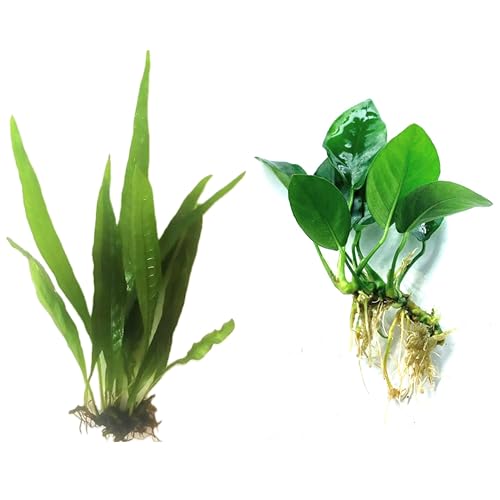
Marcus Fish Tanks Java Fern & Anubias Plant Bundle
Hardy live plants for the shaded, planted layout neons prefer.
Java Fern & Anubias Plant Bundle
Mixed beginner plant pack to fill out a densely planted neon tank.

SunGrow Indian Almond (Catappa) Leaves
Botanicals that add tannins and gently soften and acidify the water.
Tankmates
Neon tetras are peaceful and need equally peaceful, small companions. Excellent tankmates include cardinal tetras, harlequin rasboras, corydoras catfish, kuhli loaches, small peaceful gouramis, guppies, and snails or shrimp in calm tanks. Avoid anything large enough to eat a neon and avoid fin nippers and boisterous fish like tiger barbs and many cichlids. A single male betta can sometimes work in a larger, well planted tank, but watch for harassment. Because a neon school plus tankmates adds up, confirm your numbers with the stocking calculator.
Common problems and health
Most neon problems stem from unstable or poor water quality, so test the water at the first sign of trouble. The species specific concern is neon tetra disease, a parasitic infection that causes fading color, a lumpy or curved spine, and difficulty swimming; it has no reliable cure, so prevention through quarantine and good water is key, and affected fish should be removed to protect the school. Ich shows as white spots and is treatable, while fin rot and color loss usually follow stress or dirty water. Buying healthy, well settled fish from a good source and quarantining new arrivals greatly reduces these risks. For persistent illness, consult a local fish store or aquatic vet, since this guide is educational only.
Breeding
Neon tetras can be bred, but it is challenging and not something that happens by accident in a community tank. Breeding requires very soft, acidic water, dim or near dark conditions, and a separate breeding tank, because the adults eat the eggs and the fry are extremely tiny and light sensitive. Most keepers simply enjoy a thriving school rather than attempting to breed them, and the neons sold in stores are typically commercially farmed.
The bottom line
Neon tetras bring a shimmer of blue and red to any peaceful community tank when you give them what they need: a school of six or more in a planted, cycled tank of 10 to 15 gallons, soft and slightly acidic water at 70 to 78F, and calm tankmates. Get the tank mature and stable before they arrive, and a neon school becomes a stress free, eye catching centerpiece. Plan it with our minimum tank size calculator, aquarium volume calculator, and stocking calculator.
Aquarium Setup & Maintenance Planner
Stocking planner, water-test log, cycling tracker, maintenance schedule, and more, in one printable planner that keeps your tank on track.
Frequently Asked Questions
How many neon tetras should I keep together?
Neon tetras are schooling fish and should be kept in a group of at least six, with ten or more being far better. A larger school makes them feel secure, so they show natural shoaling behavior, brighter color, and less stress. Kept in small numbers or alone, neons become skittish, hide, and fade in color. Always plan your tank around a proper sized school rather than a few individuals.
What size tank do neon tetras need?
A school of neon tetras needs a tank of at least 10 to 15 gallons. While neons are small, they need horizontal swimming room for the group to shoal, and a longer tank suits them better than a tall one. A larger tank also holds more stable water chemistry, which these soft water fish appreciate. Use a stocking calculator to fit a neon school alongside any tankmates.
What water conditions do neon tetras need?
Neon tetras come from soft, slightly acidic blackwater streams, so they do best at 70 to 78F with a pH around 6.0 to 7.0 and soft water. They are sensitive to poor water quality and to swings, so a fully cycled, stable tank matters more than chasing an exact number. Avoid adding neons to a brand new tank, since they are notably intolerant of the instability of new tank syndrome.
How long do neon tetras live?
In a well maintained tank, neon tetras typically live about 2 to 3 years, sometimes longer. Their lifespan depends heavily on stable, clean, soft water and a stress free environment with a proper school. Many neons die young not from age but from being added to uncycled tanks or kept in conditions that are too hard, too cold, or too unstable. Quarantining new fish also helps avoid disease.
Are neon tetras good for beginners?
Neon tetras are popular with beginners and are peaceful and inexpensive, but they are best for a beginner who has patience for cycling and stable water, not for a brand new, unestablished tank. They are sensitive to water quality swings, so they thrive once your tank is mature and your maintenance routine is solid. Start the tank, cycle it fully, then add a school of healthy fish from a good source.
What is the difference between neon and cardinal tetras?
Both have an electric blue stripe, but the red stripe is the giveaway. On a neon tetra the red runs only along the back half of the body, while on a cardinal tetra the red runs the full length from nose to tail. Cardinals are also slightly larger and prefer a touch warmer water. Many keepers consider cardinals more vivid, though neons are hardier and more affordable.
Planning or running a tank?
Use our free calculators and guides to get every number right.
Aquarium Planner: $39