The Complete Fishless Cycling Guide
Cycle a new aquarium without harming fish: dose ammonia to 2 ppm, test daily, ride out the nitrite spike, and stock only when ammonia and nitrite read zero.
Fishless cycling means growing your filter's beneficial bacteria using a bottled ammonia source instead of live fish, so the tank is biologically ready before a single fish goes in. You dose ammonia to about 2 ppm, test the water daily, wait out the nitrite spike, and declare the tank cycled only when it converts a full ammonia dose to zero ammonia and zero nitrite within 24 hours, with nitrate present.
It is the safest, kindest, and honestly the easiest way to start a tank. No stressed fish, no daily emergency water changes, and no guilt. The trade is patience: a fishless cycle typically runs 4 to 6 weeks. This guide walks you through every stage, the exact numbers to hit, and how to cut the wait down with bottled bacteria and seeded media.
What You Need to Cycle a Tank
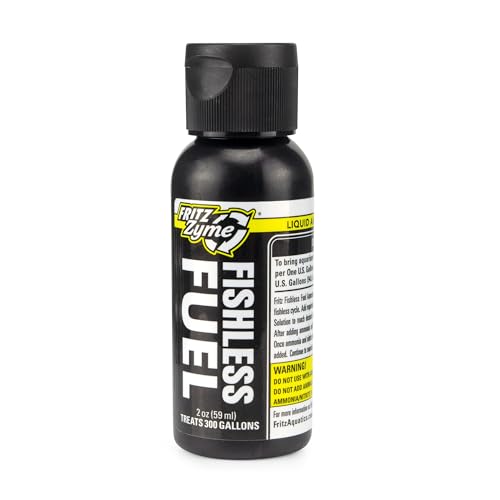
Fritz Aquatics Fritz Fishless Fuel Ammonia Source
Precise liquid ammonia made for cycling, about 4 drops per gallon for 2 ppm.

Fritz Aquatics Pro Ammonium Chloride (500 g)
Bulk dry ammonium chloride for dialing in exact ammonia doses by weight.

Pawfly 5 in 1 Aquarium Water Master Test Kit
Liquid tests for ammonia, nitrite, nitrate, and pH to track every cycling stage.

Fritz Aquatics FritzZyme 7 Live Bacteria
Live nitrifying bacteria that seeds the filter to shorten the wait.
What cycling actually does
Fish constantly produce ammonia through waste and respiration, and ammonia is toxic even at low levels. Cycling grows two colonies of beneficial bacteria in your filter: the first converts ammonia into nitrite, and the second converts nitrite into nitrate. Nitrate is far less harmful and you export it with regular water changes. This whole chain is the aquarium nitrogen cycle, and it is the single most important concept in fishkeeping.
Until those colonies exist, your tank cannot process waste. Add fish to an uncycled tank and ammonia climbs with nothing to remove it, which is how beginners lose their first fish. Fishless cycling builds the colonies first, using a controlled ammonia source instead of living animals. For a wider overview of methods, see how to cycle a fish tank.
Before you start: set up the tank
Have everything running before you add ammonia. The bacteria live on surfaces, mostly inside your filter media, so the filter must be running the entire time.
- Fill the tank with dechlorinated water. Chlorine and chloramine kill the bacteria you are trying to grow.
- Run the filter 24/7 and set the heater to about 80 F. Warmer water grows bacteria faster.
- Add substrate, hardscape, and any live plants. Plants help by using ammonia directly.
- Have your liquid test kit ready. Strips are convenient but a liquid kit is far more accurate for the low, precise readings cycling demands.
Step by step: the fishless cycle
Step 1: Dose ammonia to about 2 ppm
Add your ammonia source gradually and test until you reach roughly 2 ppm. With a liquid product like Fritz Fishless Fuel, it is about 4 drops per gallon, but always confirm with a test rather than trusting the drop count alone. With dry ammonium chloride, weigh small amounts and build up. Do not blow past 4 ppm: very high ammonia can stall the bacteria you want to encourage.
Step 2: Test daily and keep ammonia topped up
Check ammonia, nitrite, and nitrate every day and write the numbers down. At first ammonia just sits there. After one to two weeks you will see it start to drop as the first colony establishes. Each time ammonia falls noticeably, redose back toward 2 ppm so the growing bacteria keep getting fed. A drop in ammonia is your first sign of progress.
Step 3: Ride out the nitrite spike
As ammonia gets converted, nitrite appears and climbs, often higher than your kit can read. This nitrite spike is normal and unavoidable. The second colony, which eats nitrite, grows more slowly, so nitrite builds before it falls. Keep dosing ammonia and keep testing. You may also start to see nitrate appear, which is the end product and a good sign.
Step 4: Confirm a full conversion in 24 hours
The finish line is specific. Dose ammonia to about 2 ppm in the evening, then test the next day. When both ammonia and nitrite read zero within 24 hours, and you have measurable nitrate, both colonies are working at full strength. Repeat the test once or twice to be sure it holds.
Step 5: Big water change, then stock slowly
Cycling leaves nitrate high, so do a large water change before adding fish to bring nitrate down to a safe range. Size it with our water change calculator. Then add just a few fish at a time over several weeks. Even a fully cycled tank only supports the bioload its bacteria are sized for, so a slow stocking schedule lets the colony grow to match.
Reading your test results
Use this table to interpret where you are in the cycle. For deeper dives on each parameter, see our pages on ammonia, nitrite, and nitrate.
| Stage | Ammonia | Nitrite | Nitrate | What it means |
|---|---|---|---|---|
| Week 1 | High, holding | 0 | 0 | Bacteria not established yet, keep waiting |
| Weeks 1 to 2 | Starting to drop | Rising | 0 to trace | First colony active, redose ammonia |
| Weeks 2 to 4 | Drops fast | High, spiking | Rising | Nitrite spike, keep feeding ammonia |
| Weeks 4 to 6 | 0 in 24 hrs | 0 in 24 hrs | Present | Cycled: water change, then stock slowly |
How to speed up a fishless cycle
You cannot rush biology much, but you can give it a strong head start.
- Seed with bottled bacteria. A quality live nitrifying product adds the right bacteria directly to your filter. Add it with your ammonia source so the colony has food, and keep testing rather than assuming instant results.
- Borrow seeded media. A handful of filter media, a sponge, or substrate from an established, healthy tank is the fastest accelerant because it carries living colonies. Ask a trusted local fish store or fellow hobbyist, and only take from tanks that look disease free.
- Keep it warm. Around 80 F speeds bacterial reproduction compared to cooler water.
- Add surface area. More biomedia and a mature sponge give bacteria more room to colonize.
- Hold ammonia steady. Do not let it crash to zero for long during the build, or you starve the colony you are growing.
Common fishless cycling mistakes
- Overdosing ammonia. More is not faster. Above 4 ppm you risk stalling the cycle.
- Using scented or surfactant ammonia. Only pure ammonia or aquarium ammonium chloride is safe. Anything with perfume, soap, or detergent will ruin the tank.
- Relying on strips for the finish. The zero-zero confirmation needs the accuracy of a liquid kit.
- Skipping the final water change. Stocking into high nitrate stresses new fish from day one.
- Adding all your fish at once. Even a cycled tank can be overwhelmed. Stock in stages.
Get the cycle right and the rest of fishkeeping becomes calm and predictable. Plan your stocking with our stocking calculator so the bioload you add matches the bacteria you grew, and your tank stays stable from its very first fish.
Aquarium Setup & Maintenance Planner
Stocking planner, water-test log, cycling tracker, maintenance schedule, and more, in one printable planner that keeps your tank on track.
Frequently Asked Questions
How long does a fishless cycle take?
A fishless cycle usually takes 4 to 6 weeks at tropical temperatures. The first colony that eats ammonia establishes in roughly one to two weeks, then the nitrite eaters catch up over the following weeks. Warmer water around 80 F, steady ammonia, and a seeded filter all speed things up. You are cycled only when the tank processes a full dose of ammonia down to zero ammonia and zero nitrite within 24 hours.
What ammonia level should I dose to?
Dose to about 2 ppm, and never more than 4 ppm. That level feeds the growing bacteria without poisoning them, since extremely high ammonia can actually stall a cycle. Add your ammonia source a little at a time, test, and adjust. Once the colony eats 2 ppm down to zero in a day, hold it there with small daily redoses until nitrite also reads zero.
Can I use bottled bacteria to speed up cycling?
Yes, quality bottled nitrifying bacteria can shorten a fishless cycle by seeding live ammonia and nitrite eaters directly into your filter. Results vary by brand and freshness, so treat it as a head start rather than an instant fix. Pair it with an ammonia source so the new bacteria have food, keep testing daily, and confirm zero ammonia and zero nitrite before you trust it.
How do I know when my tank is fully cycled?
Your tank is cycled when a dose of ammonia to about 2 ppm drops to zero ammonia and zero nitrite within 24 hours, and your test shows measurable nitrate. That combination proves both bacterial colonies are working: one converting ammonia to nitrite, the other converting nitrite to nitrate. Do a large water change to lower nitrate, then add fish slowly over the following weeks.
Why did my nitrite spike during cycling?
A nitrite spike is a normal, expected stage of cycling. The first bacteria convert ammonia into nitrite faster than the second colony can convert nitrite into nitrate, so nitrite climbs before it falls. It can read very high for a week or two. Keep dosing ammonia, keep testing, and wait. When nitrite finally crashes to zero and stays there, the cycle is nearly complete.
Do I need to do water changes during a fishless cycle?
Usually no, because there are no fish to protect and the bacteria need food to grow. The main exception is if ammonia or nitrite climbs so high it stalls the colony, in which case a partial water change brings levels back into range. You should always do one large water change at the very end to drop nitrate before adding livestock. Our water change calculator sizes that final change.
Planning or running a tank?
Use our free calculators and guides to get every number right.
Aquarium Planner: $39