Best Aquarium Water Test Kits (2026)
The best aquarium water test kits for 2026, from the API liquid master kit to fast test strips, plus what to test while cycling a new tank.
The best aquarium water test kit is the API Freshwater Master Test Kit, the hobby standard for accurately reading pH, ammonia, nitrite, and nitrate during and after cycling. Saltwater keepers should choose the API Saltwater Master Kit. For fast routine checks, the API 5-in-1, SJ WAVE 11-in-1, and Tetra EasyStrips are convenient, with the AAwipes 8-in-1 strips as a strong budget option.
Testing your water is the closest thing fishkeeping has to a superpower. Fish cannot tell you when ammonia is climbing, but a test kit can, often days before there is any visible sign of trouble. A reliable kit is essential while you cycle a new tank and remains the fastest way to diagnose problems in an established one. Below are our researched picks, a comparison, and a clear plan for what to test and when.
Best Aquarium Test Kits at a Glance

API Freshwater Master Test Kit (800 tests)
The hobby standard liquid kit for pH, ammonia, nitrite, and nitrate in freshwater.
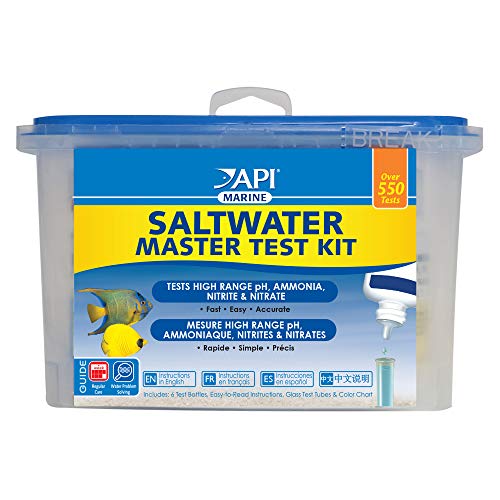
API Saltwater Master Test Kit (550 tests)
Liquid testing for pH, ammonia, nitrite, and nitrate tuned for marine tanks.
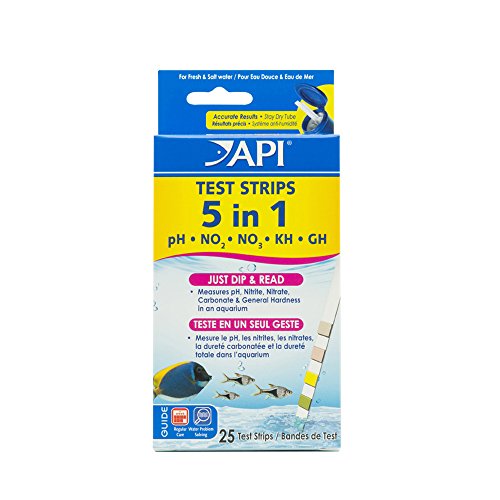
API 5-in-1 Test Strips (25 count)
Fast dip-and-read strips for a quick snapshot of pH, hardness, and nitrate.

SJ WAVE 11-in-1 Test Strips (150 strips)
Broad parameter coverage plus ammonia strips and a thermometer in one bundle.

Tetra EasyStrips Complete Test Strips (25 count)
Trusted-brand strips for a fast read on nitrate, nitrite, hardness, alkalinity, and pH.

AAwipes 8-in-1 Test Strips (50 count)
High-value strip pack for routine checks across freshwater and ponds.
Quick comparison
| Test kit | Type | Best for | Approx. price |
|---|---|---|---|
| API Freshwater Master | Liquid reagent | Accurate freshwater testing | $35.98 |
| API Saltwater Master | Liquid reagent | Marine and reef tanks | $35.98 |
| API 5-in-1 strips | Test strips | Quick routine checks | $12.98 |
| SJ WAVE 11-in-1 | Test strips | Most parameters covered | $22.99 |
| Tetra EasyStrips | Test strips | Trusted-brand convenience | $9.99 |
| AAwipes 8-in-1 | Test strips | Budget routine testing | $9.96 |
New to cycling? Read our aquarium nitrogen cycle guide to understand exactly what your test results are telling you before you add fish.
The picks in detail
API Freshwater Master Test Kit: best overall
The API Freshwater Master Kit is the benchmark every other freshwater kit gets compared to. Its liquid reagents test pH, ammonia, nitrite, and nitrate with the precision you need while cycling, when reading the difference between a trace of ammonia and zero genuinely matters. With around 800 tests in the box, the cost per test is tiny, and the glass tubes and color charts make results easy to read. If you own one test kit, this is the one. It is the tool that tells you when your tank is safe for fish.
API Saltwater Master Test Kit: best for saltwater
Marine and reef keepers need testing tuned to saltwater chemistry, and the API Saltwater Master Kit delivers liquid testing for pH, ammonia, nitrite, and nitrate with the same accuracy as its freshwater counterpart. Stable, low-waste water is critical in a reef, where livestock is sensitive and expensive. Reef keepers will eventually add dedicated tests for calcium, alkalinity, and magnesium, but this kit covers the core nitrogen parameters that keep a saltwater tank healthy from day one.
API 5-in-1 strips: quick check
When you want a fast snapshot rather than a full liquid panel, the API 5-in-1 strips read pH, carbonate and general hardness, and nitrate in under a minute. Dip, wait, and compare to the chart. They are perfect for a quick weekly check on an established tank or for screening source water. Strips are less precise than the liquid kit, so confirm anything alarming with reagents, but for routine monitoring they are fast and easy.
SJ WAVE 11-in-1: most parameters
The SJ WAVE kit packs the widest coverage here, reading up to 11 parameters and bundling separate ammonia strips plus a thermometer. With 150 strips in the box, it is a high-value way to keep tabs on a lot of variables at once, including hardness, alkalinity, chlorine, nitrite, and nitrate. It suits keepers who like a thorough weekly readout. As with all strips, treat results as a guide and verify critical numbers with a liquid kit during cycling.
Tetra EasyStrips: trusted brand
Tetra is a household name in fishkeeping, and its EasyStrips offer a reliable, inexpensive way to check nitrate, nitrite, hardness, alkalinity, and pH at a glance. The color blocks are clear and the strips are widely available, making them an easy grab-and-go for routine monitoring. They are a solid choice for a beginner who wants brand familiarity and quick results without committing to a full liquid kit right away.
AAwipes 8-in-1: budget pick
The AAwipes 8-in-1 strips are the value pick, covering pH, alkalinity, hardness, chlorine, nitrite, and more across 50 strips for under ten dollars. For keepers who test often and want a low cost per check on freshwater or ponds, they get the job done. Pair them with a liquid ammonia or master kit for the precision moments, like cycling or troubleshooting, and use the strips for everyday peace of mind.
How we chose
We did not run these kits in our own water lab. This guide draws on published manufacturer specifications, accepted fishkeeping best practices, and the patterns visible across large numbers of verified owner reviews. We weighed accuracy and resolution, the parameters each kit covers, cost per test, and ease of reading results.
We gave the most weight to accuracy for the core nitrogen parameters, ammonia, nitrite, and nitrate, because those are what keep fish alive while a tank cycles and stabilizes. That is why a liquid master kit tops the list while strips fill the role of fast, frequent monitoring. Reagents and strips expire, so we note the importance of checking dates and storing kits cool and dark. Prices change often, so confirm current cost on Amazon before buying.
What to test and when
- While cycling: test ammonia, nitrite, and nitrate daily or every other day until ammonia and nitrite read zero.
- Established tanks: a weekly check of the core parameters catches problems early.
- After changes: always test after adding fish, dosing medication, or any sign of stress.
- Your tap water: test source water separately so you can read tank results correctly.
To understand what those numbers mean, read the nitrogen cycle guide. To plan a healthy stocking level that keeps waste manageable, try our stocking calculator.
Aquarium Setup & Maintenance Planner
Stocking planner, water-test log, cycling tracker, maintenance schedule, and more, in one printable planner that keeps your tank on track.
Frequently Asked Questions
What is the best aquarium water test kit?
For accuracy and value, the API Freshwater Master Test Kit is the long-running hobby standard. Its liquid reagents read pH, ammonia, nitrite, and nitrate more precisely than strips and last for hundreds of tests, which is exactly what you need while cycling a tank. Saltwater keepers should choose the API Saltwater Master Kit. Strips are great for quick checks but less precise than liquid kits.
Are liquid test kits more accurate than strips?
Generally yes. Liquid reagent kits give finer resolution and are less affected by humidity or handling, which matters most for ammonia and nitrite during cycling, where small differences are important. Test strips are faster and more convenient for routine monitoring once a tank is established. Many keepers use strips for weekly spot checks and a liquid kit to confirm anything that looks off.
What parameters should I test in a new tank?
While cycling a new tank, track ammonia, nitrite, and nitrate, since watching those rise and fall is how you confirm the nitrogen cycle is complete. Test pH too, because it affects fish and bacteria. The cycle is finished when ammonia and nitrite both read zero and nitrate is present. Learn the full process in our nitrogen cycle guide before adding any fish.
How often should I test my aquarium water?
Test daily or every other day while cycling a new tank, then drop to about once a week once it is established and stable. Always test after adding new fish, treating with medication, or noticing any sign of stress. Established, lightly stocked tanks can stretch to every couple of weeks, but never go so long that a problem develops unseen between checks.
Why does my tap water already show ammonia or nitrate?
Some municipal water contains chloramine, which a dechlorinator breaks into ammonia, and many supplies carry measurable nitrate. That is normal and worth knowing, because it affects how you interpret tank results. Test your source water on its own so you can tell tank-generated waste from what came out of the tap. A good water conditioner neutralizes chlorine and chloramine before water goes in.
Do test kits and reagents expire?
Yes. Liquid reagents and strips both have expiration dates, and old reagents can drift and give false readings. Check the date when you buy, store kits away from heat and direct sun, and replace anything past its prime. If your results suddenly look strange or inconsistent, suspect aged reagents and confirm with a fresh kit before making big changes to your tank.
Planning or running a tank?
Use our free calculators and guides to get every number right.
Aquarium Planner: $39