Best Aquarium Gravel Vacuums & Siphons (2026)
The best aquarium gravel vacuums and siphons for 2026, from cheap manual siphons to bucket-free Python systems and electric cleaners, with how to use them safely.
A gravel vacuum turns the most important aquarium chore, the water change, from a wet, back-breaking job into a quick routine. The right siphon pulls solid waste out of the substrate before it rots into nitrate, and a bucket-free system can drain and refill straight from the tap with no lifting at all. Below are our top picks for 2026 from cheap manual siphons to no-bucket and electric cleaners, chosen from manufacturer specs and verified owner reviews, plus how to use one safely.
Best Gravel Vacuums at a Glance

Python No Spill Clean and Fill System (25 Foot)
The classic bucket-free water changer: drain, gravel-vac, and refill straight from the tap.

Python No Spill Clean and Fill System (50 Foot)
Same proven design with a longer hose for tanks far from a sink or faucet.
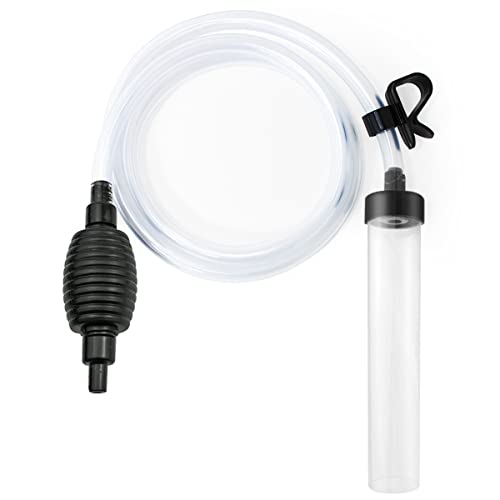
Laifoo 5ft Aquarium Siphon Vacuum Cleaner
Simple, reliable manual siphon that drains into a bucket and cleans gravel and sand.
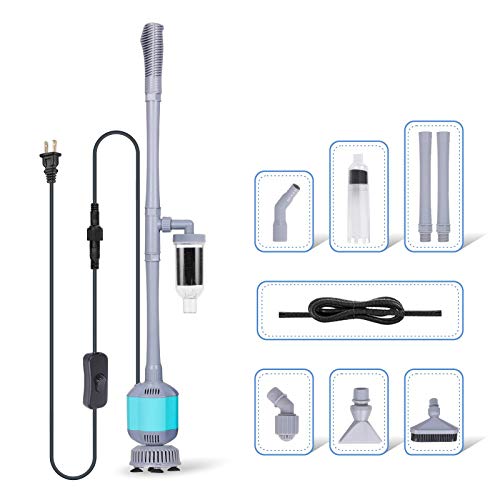
hygger 360GPH Electric Gravel Cleaner (5-in-1)
Powered cleaner that vacuums, changes water, and washes sand without manual siphoning.
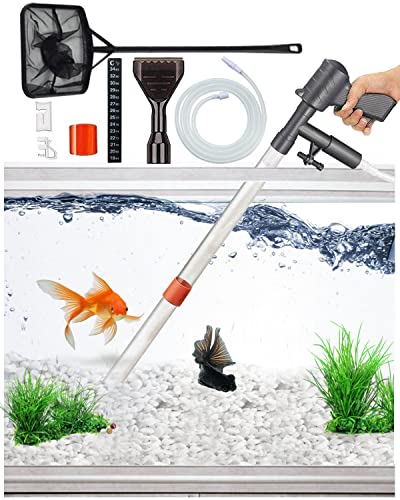
QZQ Self-Priming Gravel Cleaner with Pump
Squeeze-bulb primer starts the siphon instantly, no mouth-suction or shaking required.

hygger Bucket-Free Water Change Kit (Faucet Connector)
Connects to a faucet for no-bucket changes with a long hose and gravel siphon.
Quick comparison
| Vacuum | Type | Bucket Needed | Best For | Price |
|---|---|---|---|---|
| Python No Spill 25 ft | Faucet system | No | Most tanks | $56.49 |
| Python No Spill 50 ft | Faucet system | No | Far-from-sink tanks | $80.98 |
| Laifoo 5ft Siphon | Manual | Yes | Budget, small tanks | $13.90 |
| hygger Electric 5-in-1 | Powered | No / drain | Hands-free cleaning | $35.99 |
| QZQ Self-Priming | Manual + pump | Yes | Easy starting | $17.85 |
| hygger Bucket-Free Kit | Faucet kit | No | Budget no-bucket | $35.99 |
The best gravel vacuums, reviewed
Python No Spill Clean and Fill (25 Foot): best overall
The Python is the system most experienced keepers eventually buy, and the 25-foot version suits the majority of homes. It connects to a faucet, uses the running water to create suction for draining and gravel-vacuuming, then reverses to refill the tank straight from the tap. No buckets, no lifting, no spills. The 25-foot hose reaches most tanks from a kitchen or bathroom sink. Owners consistently say it transforms water-change day, especially on larger tanks where hauling buckets is genuinely hard work.
Python No Spill Clean and Fill (50 Foot): best long reach
If your tank sits far from a water source, the 50-foot Python is the same proven design with double the hose. It is the answer for a basement fish room, an upstairs tank, or a display across the house from the nearest faucet. The extra length costs a bit more and takes slightly longer to prime, but for tanks that the 25-foot model cannot reach, it removes the last excuse to skip a water change.
Laifoo 5ft Aquarium Siphon: best budget manual
For small and mid-size tanks, a simple manual siphon is all you need, and this Laifoo unit is a reliable, inexpensive workhorse. The 5-foot hose drains into a bucket while the wide gravel tube lifts debris out of the substrate. There are no moving parts to fail and nothing to plug in. It is the perfect first vacuum for a nano or a single community tank where a full faucet system would be overkill.
hygger 360GPH Electric Gravel Cleaner (5-in-1): best electric
This powered cleaner takes the manual effort out entirely. Drop it in, plug it in, and it vacuums the substrate, helps change water, and washes sand at up to 360 gph. The 5-in-1 attachment set lets it switch between gravel cleaning, water changing, and surface skimming. Owners with large or deeply planted tanks like that it works without priming a siphon or lifting buckets. It is the most hands-free option for keepers who dread maintenance day.
QZQ Self-Priming Gravel Cleaner: easiest to start
The hardest part of a manual siphon for beginners is starting it. This QZQ cleaner solves that with a squeeze-bulb primer: a few pumps and the siphon flows, with no mouth suction and no awkward shaking. It still drains to a bucket like a standard manual vacuum, so it is simple and affordable, just far less fiddly to get going. For anyone who has fought to start a plain siphon, the priming bulb alone is worth the small premium.
hygger Bucket-Free Water Change Kit: best budget no-bucket
If you love the idea of a Python but want to spend less, this hygger kit connects to a faucet with a metal connector for bucket-free draining and refilling at a lower price. It includes a long hose and a gravel siphon. The build is not quite as refined as the Python, but for keepers who mainly want to skip the bucket on a single tank, it is a capable, affordable way to get there.
How we chose these gravel vacuums
We did not run these through a lab. We compared manufacturer specs, hose length and reach, priming method, and attachment versatility, then read patterns across verified owner reviews for real-world reliability, ease of starting, and how well each handles both gravel and sand. We weighted ease of use heavily, because the easiest vacuum is the one you will actually use every week, and consistent water changes matter far more than any single product feature.
We also spread our picks across manual, faucet-driven, and electric styles at different price points, so there is a sensible match whether you keep one nano or a wall of tanks. Where a tool needs a bucket or a nearby faucet, we said so, since that practical detail decides which type fits your home.
Use a gravel vacuum safely
Never start a siphon by mouth. Use a priming bulb, the shake method, or a faucet system instead. On gravel, push the wide tube into the substrate to lift waste while the gravel tumbles back down. On sand, hover just above the surface so debris lifts off without sucking out the sand. In shrimp or fry tanks, cover the intake with sponge or mesh so tiny livestock cannot be drawn in. Clean a different section of substrate each week so you never disturb the whole bed at once.
Size every water change correctly
A gravel vacuum and a water change go together. For most tanks, change 10 to 25 percent weekly while you vacuum, always dechlorinating the new water and matching its temperature. Removing the right amount keeps nitrate in check without shocking your fish. Our water change calculator sizes each change to your exact tank volume, so you know precisely how much to drain and replace every time.
Dial in your routine with the water change calculator, then browse the rest of our aquarium gear reviews for the conditioners, test kits, and filters that round out easy maintenance.
Reviewed in depth
Our Python No Spill review covers the system in full, including the tap water it sends down the drain to create suction, the faucets that will not take the adapter, and the tank size below which a ten dollar siphon is simply the better tool.
Aquarium Setup & Maintenance Planner
Stocking planner, water-test log, cycling tracker, maintenance schedule, and more, in one printable planner that keeps your tank on track.
Frequently Asked Questions
How does an aquarium gravel vacuum work?
A gravel vacuum is a siphon: a wide intake tube connected to a hose. Once you start the siphon, gravity pulls water and debris down the hose into a bucket or drain. Pushing the wide tube into the gravel lifts dirt and waste out while the heavier gravel falls back down. Bucket-free systems like the Python instead connect to a faucet, using running water to create the suction and then to refill.
How do I start a siphon without using my mouth?
Never start a siphon by mouth, it is unhygienic and can pull tank water into your throat. Many vacuums include a squeeze-bulb or pump primer that starts the flow in a couple of pumps. Otherwise, the shake method works: submerge the tube fully, then move it up and down quickly to push out air until water flows. Faucet-driven systems start automatically when you turn on the tap.
Will a gravel vacuum suck up my fish or substrate?
Properly used, no. The wide intake tube is too large to pull in adult fish, and the flow slows as it widens so most fish swim away easily. Sand needs a lighter touch: hover the tube just above the surface so debris lifts off without siphoning out the sand. For shrimp or fry tanks, put a piece of sponge or mesh over the intake to keep tiny livestock safe.
How often should I vacuum the gravel?
Most tanks benefit from a gravel vacuum at every water change, typically weekly, cleaning a different section of the substrate each time so you do not disturb the whole bed at once. Heavily stocked tanks may need more attention. Planted tanks with rooted plants get a gentler, surface-only vacuum to avoid pulling up roots and releasing nutrients trapped in the soil.
Do I still need a gravel vacuum if I have a good filter?
Yes. A filter handles water-column waste, but solid waste and uneaten food settle into the gravel where the filter cannot reach. Vacuuming removes that buildup before it breaks down into ammonia and nitrate. Combined with regular water changes, gravel vacuuming is one of the most effective things you can do to keep nitrate low and fish healthy.
How much water should I change when I vacuum?
For most tanks, a weekly change of 10 to 25 percent of the water is a good target, adjusted to your stocking and test results. Vacuuming the substrate as you drain that water is efficient. Always dechlorinate the new water and match its temperature to the tank. Our water change calculator sizes each change to your exact tank volume so you remove the right amount every time.
Planning or running a tank?
Use our free calculators and guides to get every number right.
Aquarium Planner: $39