What Is Brackish Water?
Brackish water sits between fresh and salt in salinity. Learn the specific gravity range, classic species like mollies and puffers, and how to mix it.
Brackish water has a salinity between freshwater and full seawater, the kind of mix found in estuaries and mangroves where rivers meet the ocean, made by adding marine salt to freshwater to reach a specific gravity usually between 1.005 and 1.015. In plain terms, it is a middle ground that is saltier than your tap but far weaker than a reef tank.
Brackish is a genuine third category of aquarium alongside freshwater and saltwater, with its own species and its own care routine. It is often overlooked, but for the right fish it is the only way to keep them thriving long term.
Where brackish water sits on the salinity scale
Salinity is most easily tracked by specific gravity, a measure of how dense the water is compared to pure water. Freshwater sits right around 1.000, full reef saltwater runs 1.020 to 1.026, and brackish fills the gap.
| Water type | Specific gravity | Typical inhabitants |
|---|---|---|
| Freshwater | ~1.000 | Tetras, bettas, most community fish |
| Low brackish | 1.005 to 1.008 | Mollies, bumblebee gobies |
| High brackish | 1.010 to 1.015 | Green spotted puffers, monos, scats |
| Saltwater / reef | 1.020 to 1.026 | Marine fish, corals, invertebrates |
Because brackish spans a range, your exact target depends on the species you keep. Some fish, such as the green spotted puffer, prefer low brackish as juveniles and shift toward higher salinity as adults, so plan to adjust over the fish's life.
Classic brackish species
These fish evolved in estuaries and generally do best with at least some salt in the water. A few favorites for brackish tanks:
- Mollies, hardy livebearers that often color up and stay healthier with a bit of salt.
- Figure-eight and green spotted puffers, charismatic but messy fish that need salt and large tanks.
- Bumblebee gobies, tiny striped fish well suited to low-end brackish nano tanks.
- Archerfish, monos, and scats, larger active fish for big brackish setups.
Always research each species before mixing them, since salinity preferences and adult sizes vary. Puffers in particular are best kept alone or in carefully chosen company because of their nipping and high bioload.
How to mix brackish water
Making brackish water is the same process as mixing saltwater, just to a lower target. The most important rule is to use a marine salt mix, not aquarium tonic salt or table salt. Marine salt supplies the minerals and buffering that keep brackish water hard and alkaline, which is exactly what these estuary fish prefer.
- Dechlorinate your freshwater, or start from RODI water for full control.
- Add marine salt gradually and stir until fully dissolved.
- Measure with a hydrometer and adjust toward your target specific gravity.
- Match the same salinity for every water change so the tank stays stable.
To work out exactly how much salt your volume needs to hit a target specific gravity, use our salt mix calculator. If you ever need to translate between specific gravity, ppt, and other units, our aquarium unit converter handles the math.
Tools for Mixing Brackish Water
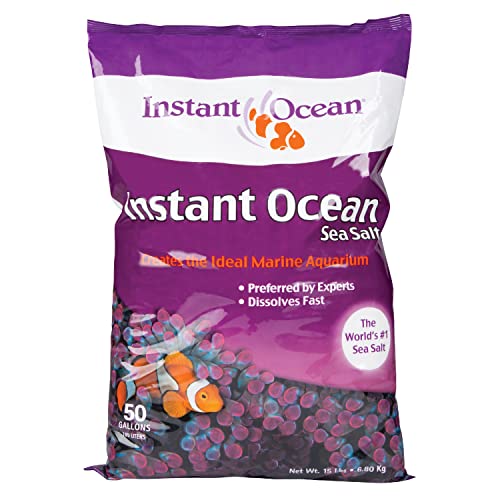
Instant Ocean Instant Ocean Sea Salt (50 gal mix)
Marine salt mix to build brackish water to your target specific gravity.

Keeping brackish water stable
Day to day, a brackish tank runs much like a freshwater one with one extra habit: matching salinity at every water change. Mix replacement water to the same specific gravity as the tank so the level never swings. Keep a reliable hydrometer on hand, top off evaporation with fresh dechlorinated water (since salt does not evaporate), and confirm your readings before adding water.
Brackish fish are generally hardy, and the salt itself discourages some parasites, which makes these tanks rewarding once you have the routine down. If you are still deciding between water types, our guide comparing freshwater vs saltwater aquariums puts brackish in context.
Aquarium Setup & Maintenance Planner
Stocking planner, water-test log, cycling tracker, maintenance schedule, and more, in one printable planner that keeps your tank on track.
Frequently Asked Questions
What is brackish water?
Brackish water has a salinity between freshwater and full seawater, the kind of water found where rivers meet the sea in estuaries and mangrove swamps. You create it by mixing marine salt into dechlorinated freshwater to reach a target specific gravity, commonly between 1.005 and 1.015. It is its own distinct environment with its own fish, not simply lightly salted freshwater or watered-down saltwater.
What specific gravity should brackish water be?
Most brackish tanks run between 1.005 and 1.015 specific gravity, far below the 1.020 to 1.026 of a reef tank but well above plain freshwater at about 1.000. The exact target depends on your species, with low-end brackish around 1.005 for fish like mollies and higher salinity near 1.015 for many puffers. Measure with a hydrometer or refractometer and adjust slowly over time.
What fish live in brackish water?
Classic brackish species include mollies, figure-eight and green spotted puffers, bumblebee gobies, archerfish, monos, scats, and many livebearers that tolerate salt well. These fish evolved in estuaries and often do best with at least some salt in the water. Always research each species, since their preferred salinity ranges differ and some shift saltier as they mature, like the green spotted puffer.
Can I use aquarium salt to make brackish water?
No, use a marine salt mix made for saltwater aquariums, not aquarium tonic salt or table salt. Marine salt contains the full range of minerals and buffers that brackish fish need and helps keep the water hard and alkaline. Plain aquarium salt is sodium chloride only and lacks those elements. Mix the marine salt into dechlorinated water and confirm the specific gravity before adding it to the tank.
Is brackish water hard to maintain?
It is very manageable once you understand it. The main differences from freshwater are mixing salt to a target specific gravity and matching that salinity during water changes so it stays stable. Brackish fish tend to be hardy, and the salt itself discourages some parasites. The keys are a reliable hydrometer, consistent salt mixing, and choosing fish with compatible salinity needs.
Planning or running a tank?
Use our free calculators and guides to get every number right.
Aquarium Planner: $39