Best Aquarium Water Conditioners (2026)
The best aquarium water conditioners and dechlorinators for 2026, compared by chemistry, dosing, and value, so your tap water is safe for fish in seconds.
A water conditioner is the cheapest, most important bottle in fishkeeping. Tap water in most US cities carries chlorine or chloramine that burns fish gills and wipes out the beneficial bacteria running your nitrogen cycle. The right conditioner neutralizes those chemicals in seconds, every water change, for years. After comparing the chemistry, dosing economy, and verified owner feedback across the most popular formulas, Seachem Prime is our top overall pick, with API Tap Water Conditioner as the best value. Here are five conditioners worth keeping on the shelf.
Best Water Conditioners at a Glance

Seachem Prime Concentrated Conditioner (500 ml)
Detoxifies chlorine, chloramine, plus ammonia and nitrite for 48 hours. The hobby standard.

API Tap Water Conditioner (16 oz)
Super-concentrated dechlorinator. Just 1 ml treats 20 gallons, so a small bottle lasts.

Adds aloe vera to rebuild the slime coat. Ideal after handling, moving, or fin damage.
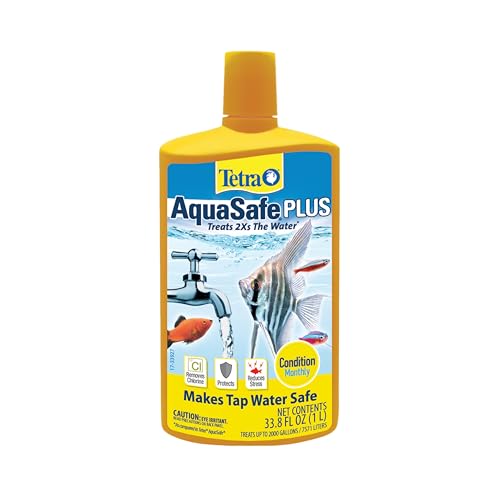
Beginner-friendly conditioner with biopolymers and vitamins for fresh or marine tanks.

Aquatic Experts TankFirst Complete Conditioner (500 ml)
Removes chlorine and chloramine, detoxifies ammonia, and stays odor-free. Reef-safe.
Quick comparison
| Conditioner | Treats ammonia? | Dose per 10 gal | Best for | Price |
|---|---|---|---|---|
| Seachem Prime | Yes (plus nitrite 48 hr) | 0.5 ml | Every tank, value | $16.62 |
| API Tap Water Conditioner | No (chlorine/chloramine) | 0.5 ml | Budget dechlorinating | $5.68 |
| API Stress Coat | No (adds aloe slime coat) | 5 ml | Stressed or injured fish | $7.30 |
| Tetra AquaSafe Plus | No (binds metals) | 5 ml | Beginners | $22.29 |
| Aquatic Experts TankFirst | Yes (detoxifies ammonia) | ~3.8 ml | Odor-sensitive, reef | $16.99 |
The picks, reviewed
1. Seachem Prime: best overall
Prime has been the default conditioner in serious fishrooms for a reason. It removes chlorine and chloramine instantly, then goes a step further by detoxifying ammonia, nitrite, and nitrate for up to 48 hours. That extra detox window is genuinely useful during a fish-in cycle emergency or after a filter mishap, buying you time to react before fish suffer. It is also brutally concentrated: a single 5 ml capful treats 50 gallons, so the 500 ml bottle handles roughly 5,000 gallons of new or replacement water.
The trade-off is the smell, which owners describe as a sulfur or rotten-egg note, and the need to measure carefully because the dose is small. Neither is a real problem once you keep a dosing syringe nearby. For the vast majority of freshwater and saltwater keepers, Prime is the safest single bottle to own, and at this price the cost per treated gallon is almost nothing.
2. API Tap Water Conditioner: best value
If you only need to neutralize chlorine and chloramine, nothing beats API Tap on cost per gallon. The formula is even more concentrated than Prime for dechlorinating duty: just 1 ml treats 20 gallons, meaning the small 16 oz bottle treats roughly 9,460 gallons. For a keeper running one or two tanks with weekly water changes, a single inexpensive bottle can realistically last a year or more.
What it does not do is detoxify existing ammonia or nitrite, so it is not your rescue bottle during a cycle crash. But for routine, planned water changes on a healthy, cycled tank, that capability is rarely needed. Pair API Tap with a reliable test kit and a separate ammonia plan, and you have an extremely economical maintenance routine.
3. API Stress Coat: best for stressed or injured fish
Stress Coat dechlorinates like a standard conditioner but adds aloe vera to help replace the protective slime coat that fish lose to handling, netting, shipping, or fighting. That makes it the bottle to reach for when you are acclimating new arrivals, moving fish between tanks, or nursing torn fins. Owners of fancy bettas and other long-finned species often keep it on hand specifically for fin repair.
Because it dechlorinates as well, you can use it as your everyday conditioner if you like, though some keepers prefer to reserve the slime-coat boost for stressful events rather than dosing aloe at every change. Either approach is fine. At well under ten dollars, it is cheap insurance for any tank that sees frequent rescaping or new stock.
4. Tetra AquaSafe Plus: best for beginners
AquaSafe Plus is the conditioner most new keepers meet first, and it earns the spot. It neutralizes chlorine and chloramine, binds heavy metals, and adds biopolymers and vitamins marketed to support the slime coat and ease new-tank stress. The dosing is forgiving and the larger 33.8 oz bottle is easy to find at any pet store, which matters when you are still building your routine.
It is less concentrated than Prime or API Tap, so you pour more per gallon and the cost per treated gallon is higher. That is a fair trade for simplicity if you run a single community tank. As your collection grows, most keepers eventually graduate to a more concentrated option, but AquaSafe remains a dependable, widely available choice.
5. Aquatic Experts TankFirst: best odor-free option
TankFirst is the pick for keepers who cannot stand the sulfur smell of Prime. It removes chlorine and chloramine, detoxifies ammonia, and is rated safe for freshwater, marine, and reef tanks including live corals, all without the off-putting odor. Dosing is straightforward at 1 capful or teaspoon per 10 gallons, and the 500 ml bottle treats around 1,000 gallons.
It costs a little more per gallon than Prime and is a slightly smaller brand, but the verified owner feedback on its effectiveness and pleasant handling is consistently strong. If you do frequent large changes on a reef and want ammonia detox without holding your breath, TankFirst is a smart buy.
How we chose
We did not run hands-on lab trials. Instead, these picks come from comparing published manufacturer chemistry and dosing data, cross-checking against established aquarist best practices, and reading through verified owner reviews to surface real-world reliability and complaints. We weighted four things:
- Chemistry: Does it handle chloramine, not just chlorine? Does it detoxify ammonia or nitrite for emergencies?
- Dosing economy: Cost per treated gallon, since this is a product you buy repeatedly for years.
- Safety range: Suitability for freshwater, marine, reef, plants, snails, and shrimp at the labeled dose.
- Owner-reported reliability: Consistency, shelf life, and handling quirks like odor or measuring difficulty.
Every conditioner here is safe for the beneficial bacteria in your filter, which is exactly the point: removing chlorine protects your nitrogen cycle as much as it protects your fish. The differences come down to whether you need ammonia detox, a slime-coat boost, or simply the lowest cost per gallon.
Get your dose right every time
The single most common conditioner mistake is dosing to the printed tank size instead of the actual water volume. A 55-gallon tank with substrate, hardscape, and equipment often holds closer to 47 gallons, so dosing for 55 wastes product, and under-dosing a replacement bucket can leave chlorine in the tank. Measure your refill volume and match it to the bottle's dosing line.
Our water change calculator tells you exactly how many gallons you are replacing at any percentage, so you can convert straight to milliliters of conditioner. Pair it with our test kit guide to keep ammonia, nitrite, and nitrate in check, and your weekly maintenance becomes a quick, confident routine.
Reviewed in depth
Our Seachem Prime review covers the detail behind the default recommendation, including the difference between removing ammonia and detoxifying it, why a test kit still reads ammonia after you dose, and the 48 hour limit on that protection.
Aquarium Setup & Maintenance Planner
Stocking planner, water-test log, cycling tracker, maintenance schedule, and more, in one printable planner that keeps your tank on track.
Frequently Asked Questions
Do I really need a water conditioner for my aquarium?
Yes, for almost every tank filled with municipal tap water. Cities add chlorine or chloramine to kill bacteria, and both are toxic to fish gills and to the beneficial bacteria that run your nitrogen cycle. A conditioner neutralizes them in seconds. The only keepers who can skip it are those using pure RODI or well water confirmed free of chlorine, though many still use a conditioner as cheap insurance against trace metals.
How much water conditioner should I add?
Always dose to your real water volume, not the tank label. A 40-gallon tank with substrate, rocks, and equipment usually holds closer to 34 to 36 gallons. Overdosing most conditioners by a small amount is safe, but you waste product and money. For an exact figure, run our water change calculator, then match the milliliters to the dosing line on your bottle so every refill is treated correctly.
What is the difference between a dechlorinator and a full conditioner?
A basic dechlorinator only neutralizes chlorine. A full conditioner also breaks the chlorine-ammonia bond in chloramine and often detoxifies the resulting ammonia, plus binds heavy metals like copper. Seachem Prime goes further and temporarily detoxifies nitrite and nitrate too. If your utility uses chloramine, which most US cities now do, choose a complete conditioner rather than a chlorine-only product.
Can I add conditioner and fish at the same time?
Add the conditioner to the new water first, give it 30 to 60 seconds to react, then pour the treated water into the tank. Conditioners work almost instantly, so there is no long waiting period. Never add untreated tap water near fish and dose afterward, because even brief chlorine exposure stresses gills. For new fish, the tank itself must already be fully cycled before they go in.
Will water conditioner hurt my beneficial bacteria or aquarium plants?
No. Quality conditioners are designed to protect the nitrogen cycle, and removing chlorine actually shields your beneficial bacteria from harm. They are also safe for live plants, snails, and shrimp at the labeled dose. Avoid heavy overdosing of ammonia-binding conditioners like Prime in a small tank, since extreme overdoses can briefly lower oxygen, but normal water-change dosing is completely safe.
How long does a bottle of water conditioner last?
Longer than most beginners expect. Concentrated formulas treat hundreds of gallons per bottle: a 500 ml bottle of Seachem Prime treats around 5,000 gallons, and a 16 oz bottle of API Tap treats roughly 9,460 gallons. For a single 40-gallon tank doing weekly 25 percent changes, one small bottle can last a year or more. Store it sealed and out of direct sunlight to keep it stable.
Planning or running a tank?
Use our free calculators and guides to get every number right.
Aquarium Planner: $39